Why Freedom Requires Practice
“Freedom is an art demanding practice, and most of us are unpracticed.”
– James Farmer, Recipient, Presidential Medal of Freedom
Why do we need to practice freedom? Isn’t freedom a set of rights granted by America’s democratic government, so people are free to do as they please, so long as they conform to laws? What skills comprising freedom require deliberate practice?
I will change one word in James Farmer’s opening quote—replace “art” with “capacity.”
Freedom’s fundamental capacity is volition—the ability to make choices. Volition is the cognitive process of deciding on a specific course of action. It is a conscious, skillful choice at the moment, not an unconscious, impulsive habit.
Air Force Lieutenant Colonel Dan Rooney captures the significance of volition in these sentences from a videotape on the Volition America website:
“Our choices will culminate in writing the legacy of our lives. Armed with the power of volition, anything is possible. We have all been given the opportunity to live a life fueled by courage and faith, and the pursuit of our dreams and passions.”
Every second of our lives, we make choices of varying significance. Accordingly, volition involves basic choices, such as:
- Set realistic yet uninspiring goals or conceive breakthrough goals that seem out of reach
- Seek to understand how others feel and what they think—or just listen without getting involved emotionally or mentally
- Focus attention on your inner thoughts, surroundings, or bodily sensations
- Distill lessons learned from both successful and undesirable outcomes
- Face problems immediately or put off dealing with them as long as possible.
The cumulative effect of these five basic choices carries a life-altering impact—for better or for worse.
What is the impact on our choices when we deliberately practice to increase our capacity for volition? When we choose goals that express our passionate values, we feel inspired to pursue our heartfelt yet uncomfortable goals. When we display courage to demolish comfort zones, we are free to expend whatever effort and risk are required to gain spectacular success. The quality of our lives reflects the cumulative impact of our proficiency with volition.
ALL CAPACITIES REQUIRE PRACTICE. VOLITION IS NO DIFFERENT
Mental, emotional, and physical abilities all need training and practice to get better. Golfers spend hours working on their swing. Entrepreneurs rehearse their pitches before meeting investors. Soldiers learn to manage stress before going into combat. Top business leaders practice key skills required to reach their goals.
Freedom is no exception as a capacity requiring practice. Did you or any of your friends receive formal training about exercising volition in high school or college classes? How can you be good at any capacity if you were never taught the basics?
If you’re not practicing freedom, what are you likely to be practicing? Creating or preserving comfort zones.
Without effective training and practice, how does the pursuit of happiness typically turn out for most Americans?
- We choose to set copycat goals that express socially endorsed forms of success instead of heartfelt goals connected to our own passionate values.
- We choose to pursue goals that require reasonable effort and risk instead of expending the effort required to achieve vital goals.
Heroic Experiment for This Week
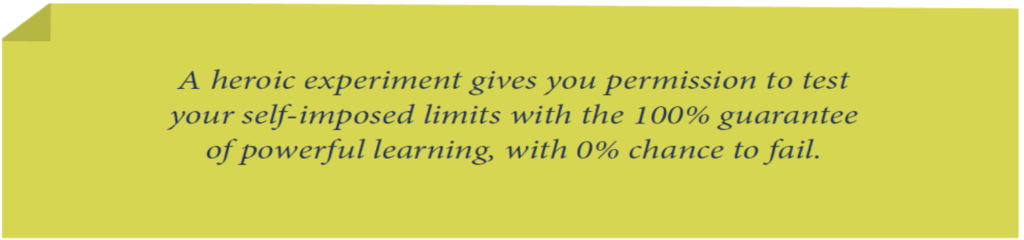
How will you practice volition this week by taking courageous action to demolish a comfort zone that hinders you from achieving your desired results? (Email me your answer, so I know the impact of this newsletter)
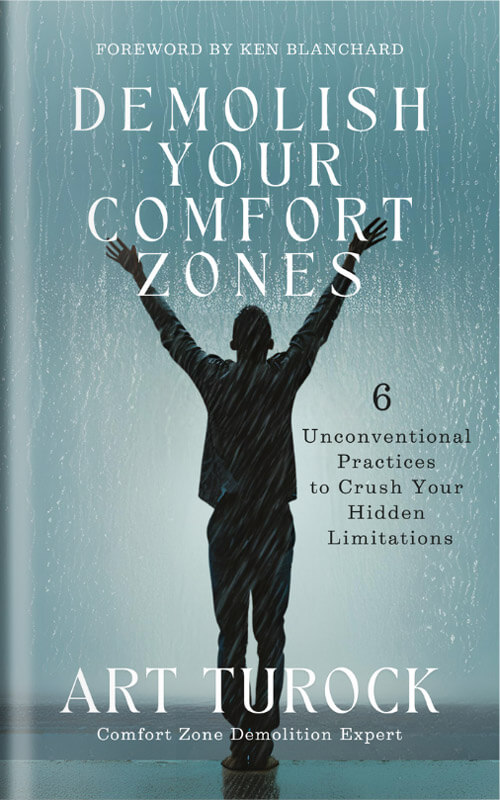
Art’s new book, Demolish Your Comfort Zones, provides practices to massively boost volition. It will be available for purchase, October 1.
Right now, you can download an eye-opening sample chapter on “Hidden Limitations of Conventional Performance Improvement Methods.”
Get ready to be surprised by the limitations of goal setting, time management, and holding people accountable—that no one notices. Ready for a wakeup call? Click the button below.